


Jader Gil
Marketing Expert
August 1, 2026
9 min read
Yes—you can finance a portable car lift and start using it this month without draining your savings. Most of my customers put a full-height, American-made portable two-post hoist to work for a manageable monthly payment instead of a five-figure hit up front, and because it's business equipment, Section 179 of the IRS tax code can let a qualifying shop deduct the full purchase price in the same year it's placed in service. In other words, the lift can start paying for itself—and shrinking your tax bill—before the first payment clears.
I've spent years helping mechanics, mobile techs, and small shop owners get under vehicles safely, and the number one thing that stops people isn't whether they need a lift. It's the sticker. So let me walk you through exactly how car lift financing works, what it really costs per month, and how to make the math work in your favor.
Paying cash feels responsible, but for a working shop it often isn't the smart move. When you drop $8,000 to $15,000 on a lift in one shot, that money is gone—it can't cover payroll, parts inventory, or a slow month. Financing keeps your cash where it belongs: in your business, working.
Here's the part people miss. A car lift is a revenue-producing tool. A single full-height hoist can help one bay add tens of thousands in yearly revenue by letting you take on jobs you'd otherwise turn away—brakes, exhaust, suspension, transmission drops. If the lift earns more each month than it costs to finance, you're cash-flow positive from day one. That's the whole game.
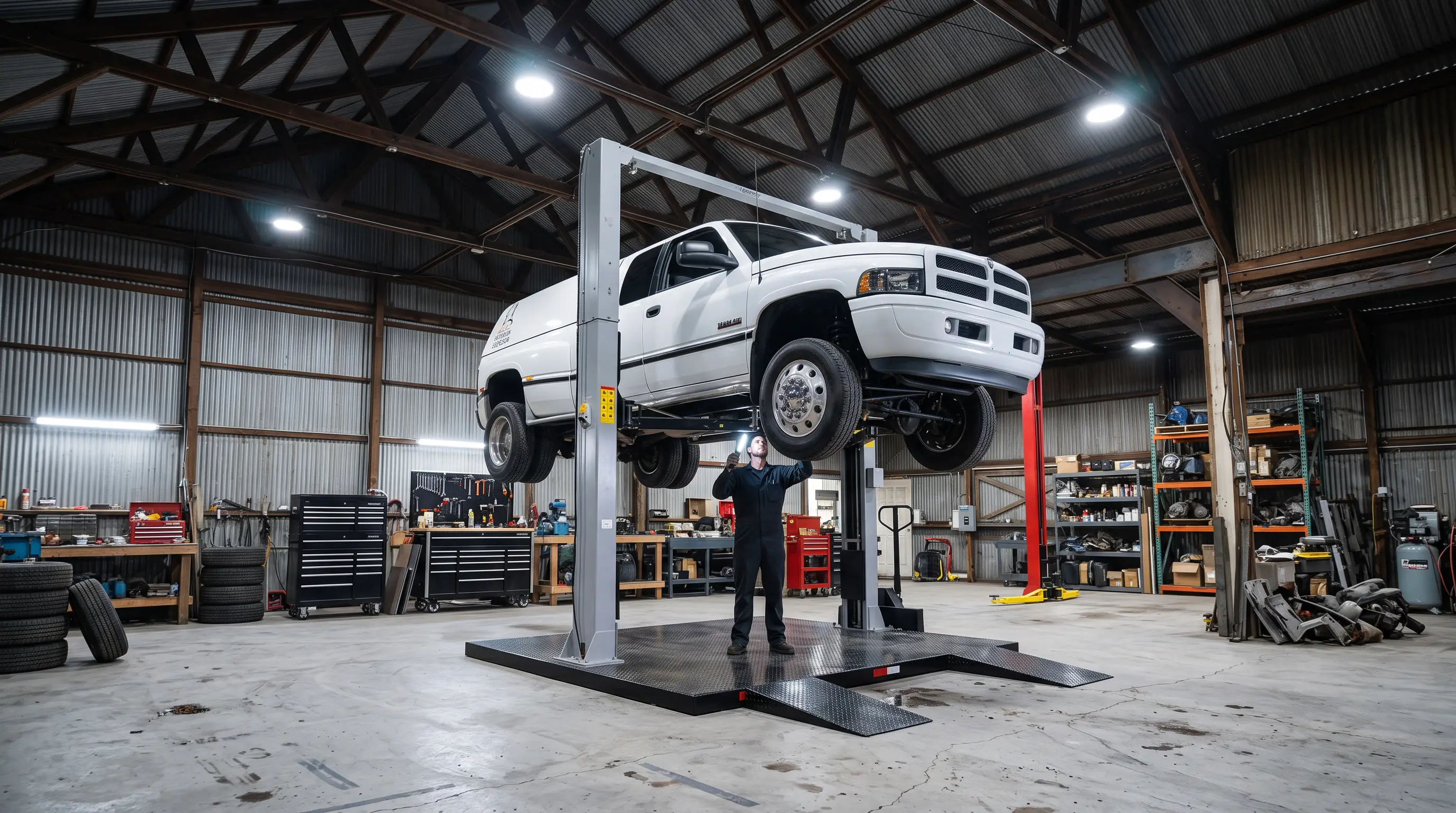
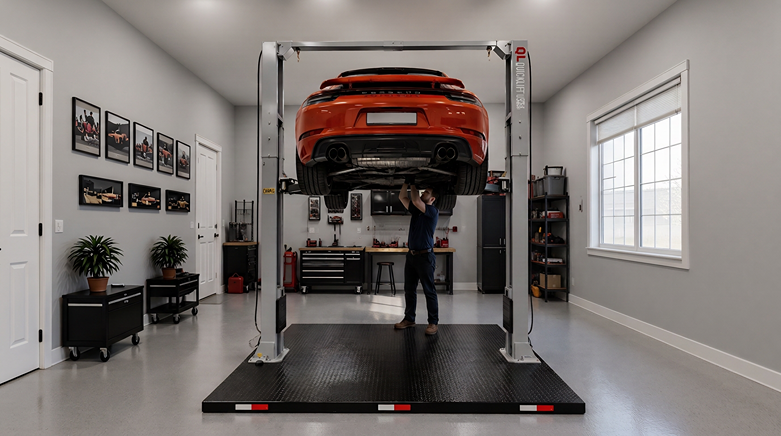
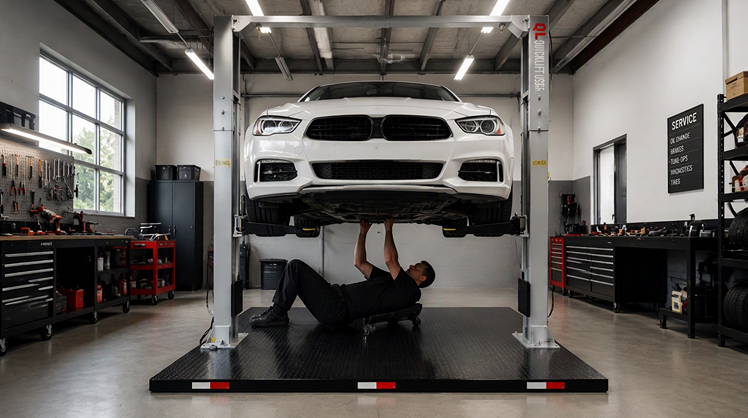
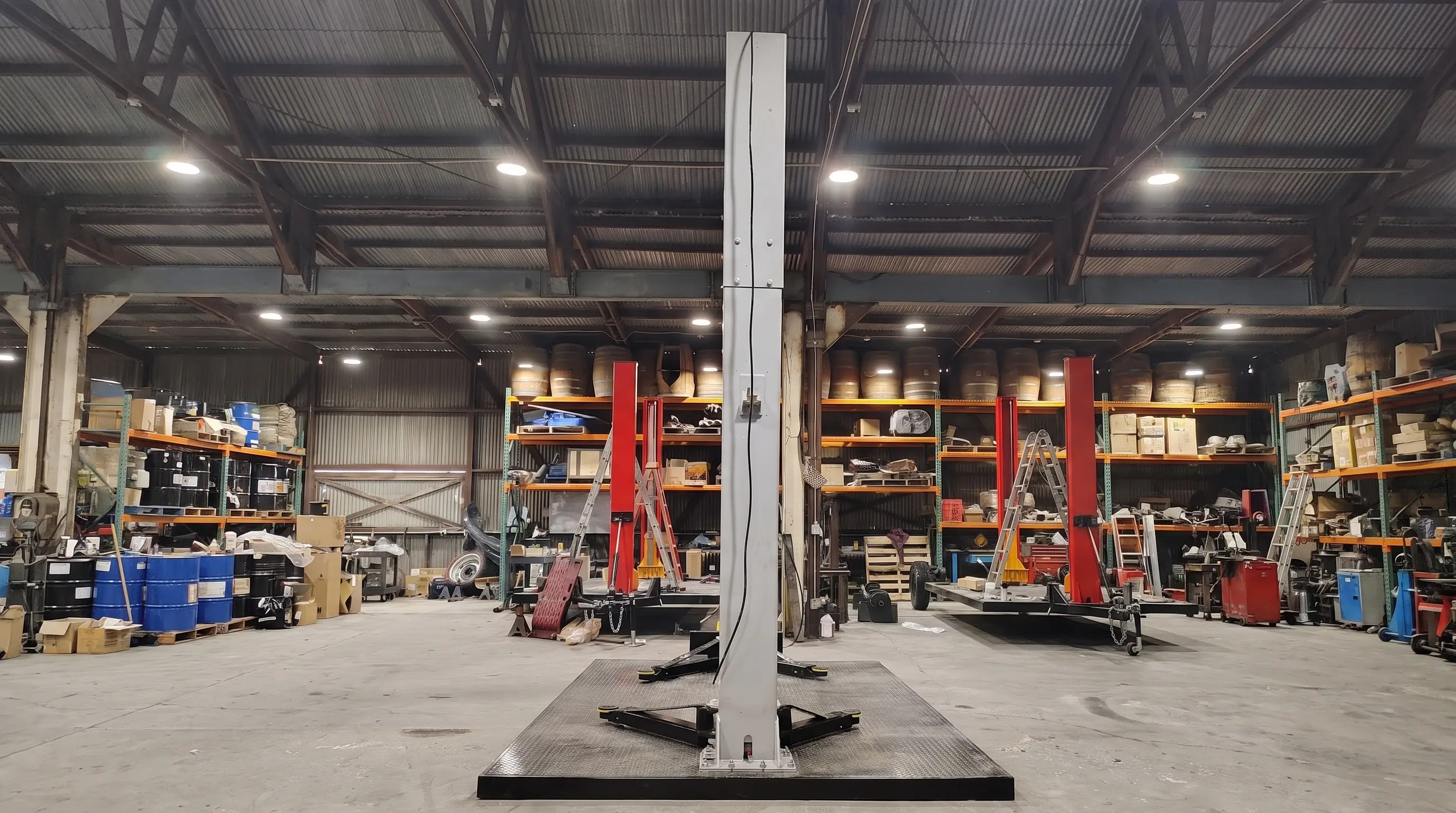
And unlike a permanently installed two-post lift, our hoist mounts on its own black diamond-plate flatbed trailer deck—zero concrete, zero anchors, zero permits, and about a 15-minute setup. That means no contractor bill, no landlord approval, and no permit fees stacked on top of the purchase. If you rent your space, that alone can save you thousands. Curious how it stands up with no bolts at all? I break it down in how a portable car hoist works.
Let's get concrete, because vague answers help nobody. Our hoists range depending on capacity—models handle anywhere from 8,000 all the way up to 76,000 pounds—so the price spans a range too. For a full transparent breakdown, see our portable car lift cost and pricing guide.
When you finance, your monthly payment comes down to three things: the price of the lift, your down payment, and the term length. A shorter term means higher payments but less interest paid overall; a longer term lowers the monthly number but stretches out the cost. Most equipment financing runs 24 to 60 months.
To put it in plain terms: many shop owners finance a lift for roughly what they'd spend on a decent tool cabinet payment or a phone-and-software subscription stack each month. When you compare that to what one lift-enabled job pays out, the payment often looks small. Want to see the full return picture? Run the numbers with our ROI and payback calculator.
Pro tip: Don't just chase the lowest monthly payment. Add up the total you'll pay over the full term, then weigh it against the resale value you'll keep. Portable hoists hold 60–80% of their value, so a financed lift you resell later can recover a big chunk of what you paid—something a lease never gives you.
These three get lumped together, but they're very different animals.
Renting makes sense for a one-off weekend job. Beyond that, the money evaporates—you pay every time and own nothing at the end. I ran the full comparison in car lift rental vs. buying, and for anyone lifting cars more than a few times a month, renting is the most expensive path there is.
Leasing lowers your monthly payment and can carry tax perks, but at the end of the term you typically hand the equipment back or pay a buyout. It's fine for gear that goes obsolete fast. A steel car hoist isn't that—it lasts for years and holds resale value, so leasing often leaves money on the table.
Financing splits the difference and, for most shops, wins. You spread the cost, you build equity, and the lift is yours at the end—an asset you can sell, trade, or keep earning with. For a working tool that isn't going obsolete, ownership almost always beats renting or leasing over time.
This is where a lot of shop owners leave real money on the table. Under Section 179 of the IRS tax code, a qualifying business can deduct the full purchase price of eligible equipment—like a car lift used for business—in the year it's placed in service, rather than depreciating it slowly over many years. The annual deduction limits are generous (well over a million dollars in recent years), so a single hoist sits comfortably inside them.
Play that out: if you finance a lift, put it to work this year, and your business qualifies, you may be able to write off the full purchase price on this year's taxes—even though you've only made a few monthly payments so far. That deduction can meaningfully lower the real, after-tax cost of the equipment. It's one of the reasons buying near year-end is so popular with shop owners.
I'm not a tax advisor, so talk to yours about your specific situation and current-year limits—but ask the question. The savings are often bigger than people expect.
Equipment financing is usually easier to land than people fear, because the lift itself often serves as collateral. Lenders typically look at a few things: your time in business, your credit profile, and whether the payment fits your cash flow. Newer businesses can still get approved—sometimes with a larger down payment or a co-signer.
To make approval smoother, come prepared. Have a rough sense of the model and capacity you need, your monthly budget, and how the lift will generate revenue. If you're still deciding on the machine itself, our complete two-post lift buyer's guide walks through capacity, safety, and setup so you can match the lift to your work before you talk numbers.
Mobile mechanics, this applies to you too. A financed portable hoist can turn your truck into a full service bay that travels—see how in taking your shop to the customer. The payment is small; the jobs it unlocks are not.
Let me make this tangible with a simple illustration—not a quote, just the shape of the math. Say you finance a hoist and your payment lands somewhere around $250–$350 a month over a typical term. Now look at the other side of the ledger. One brake job might net you $200–$400 in labor. A suspension or strut job, more. A single transmission or clutch drop, more still—and those are exactly the jobs that are miserable or unsafe on jack stands.
So the real question isn't "can I afford the payment?" It's "how many jobs a month does the lift let me say yes to?" If the answer is even two or three you'd otherwise turn away or send elsewhere, the lift has already covered its own payment and started throwing off profit. That's why I tell people the payment isn't a cost—it's the cheapest employee you'll ever hire, and it never calls in sick. If you're weighing our hoist against a benchtop-style option, the MaxJax comparison shows why full-height capability changes which jobs you can bill for.
When you buy can be almost as important as what you pay. Because of Section 179, a lift placed in service before your tax year closes may be deductible on that year's return—so buyers who move in the fourth quarter can finance the equipment, make just a payment or two, and still claim the deduction for the whole year. That's a powerful combination: low out-of-pocket now, meaningful tax benefit at filing time.
The flip side is a mistake I see often: waiting. Every month you delay is a month of jobs you didn't take and a lift you didn't own. Steel doesn't go obsolete, demand for honest repair work isn't slowing, and a portable hoist that's built with proper locking systems and safety engineering keeps earning for years. The best time to get financed is usually as soon as the payment fits your numbers.
A few traps catch people, and all of them are easy to sidestep. First, don't over-focus on the down payment and ignore the term—stretching a loan too long to hit a tiny monthly number can cost you far more in total interest. Second, don't finance more machine than you need, but don't under-buy either; a hoist that can't handle the vehicles you actually service is a payment with no payoff. Third, don't skip the tax conversation—leaving a Section 179 deduction on the table is one of the most expensive mistakes a shop owner can make. Get the capacity right, keep the term sensible, and loop in your accountant, and financing becomes a clean, confident decision.
Here's the mindset shift that makes financing feel effortless: stop thinking of the payment as a bill and start thinking of it as a slice of one job. If your lift payment is a couple hundred dollars a month, a single brake job or suspension repair can cover it. Everything after that is profit.
Do the honest math on your own shop. How many extra jobs per month does the lift let you take? What's the average ticket? Multiply it out. For most owners I talk to, the lift doesn't just pay for itself—it becomes one of the best-returning tools in the building, right up there with a good scan tool or an alignment rack.
A portable car hoist is one of the few purchases that can start paying you back the same month you get it—no concrete, no permits, no waiting on a contractor. If the only thing standing between you and more jobs is how to spread the cost, let's solve that together. Tell us the work you do and the capacity you need, and we'll help you find a payment that fits. Book a Free Quote and let's get you lifting cars and earning more—starting now.
Often, yes. Because the equipment can serve as collateral, lenders are frequently more flexible than with unsecured loans. A larger down payment, a co-signer, or a shorter term can help you get approved even if your credit isn't perfect. It's worth applying rather than assuming no.
For a qualifying business, a car lift used in your work is generally treated as deductible business equipment, and Section 179 may let you deduct the full purchase price in the year it's placed in service. Always confirm the details and current-year limits with your tax professional.
It varies by lender and your credit, but many equipment loans ask for little to nothing down, while others want 10–20%. A larger down payment lowers your monthly cost and total interest. Choose the amount that keeps your cash flow comfortable without stretching your budget thin.
You'll pay some interest, yes—but that cost is often outweighed by keeping your cash working, the revenue the lift generates each month, potential tax deductions, and the resale value you retain. For a working shop, the total picture usually favors financing over a big one-time cash outlay.