



Jader Gil
Marketing Expert
April 2, 2026
9 min read
Most shop owners looking to grow revenue think about hiring another tech, expanding their bay count, or investing in a second permanent lift. Carlos, an independent shop owner in Menifee, California, did none of those things. He bought one portable car hoist, and over the next twelve months, it generated $50,000 in additional revenue.
Not $50K in potential. Not $50K in theoretical capacity. Fifty thousand dollars in tracked, invoiced, and deposited income from a single piece of portable equipment.
Here's exactly how it happened.
This post breaks down exactly how that happened, what the numbers looked like, and why portable car hoist ROI is one of the most overlooked metrics in the independent repair industry right now.
The uncomfortable truth is that many shops are losing money every week without realizing it, as the lost revenue never appears on a report. It's invisible.
You have a few options when your only lift is full. You can stack cars in the lot and make customers wait. You can turn work away. Alternatively, you can try to complete the job using jack stands, which is slower and, honestly, not always safe.
None of those are viable options. And if you run a mobile mechanic operation, it's even worse, because you have zero lift infrastructure to start with. You're doing brake jobs in driveways with a floor jack and a prayer.
According to the Bureau of Labor Statistics, automotive service technicians and mechanics hold over 700,000 jobs in the U.S., with independent shops making up a significant share of that workforce. Yet most small shops operate with just one or two lifts, creating serious bottlenecks during peak hours.
The problem isn't just physical. It's financial. Every vehicle that remains unlifted leads to a job that either takes longer, gets turned away, or gets done unsafely. All three of those outcomes cost you money.
Before we get to Carlos's numbers, it helps to understand what a portable car hoist brings to the table, because it's not just a cheaper version of a permanent lift. It solves a different problem.
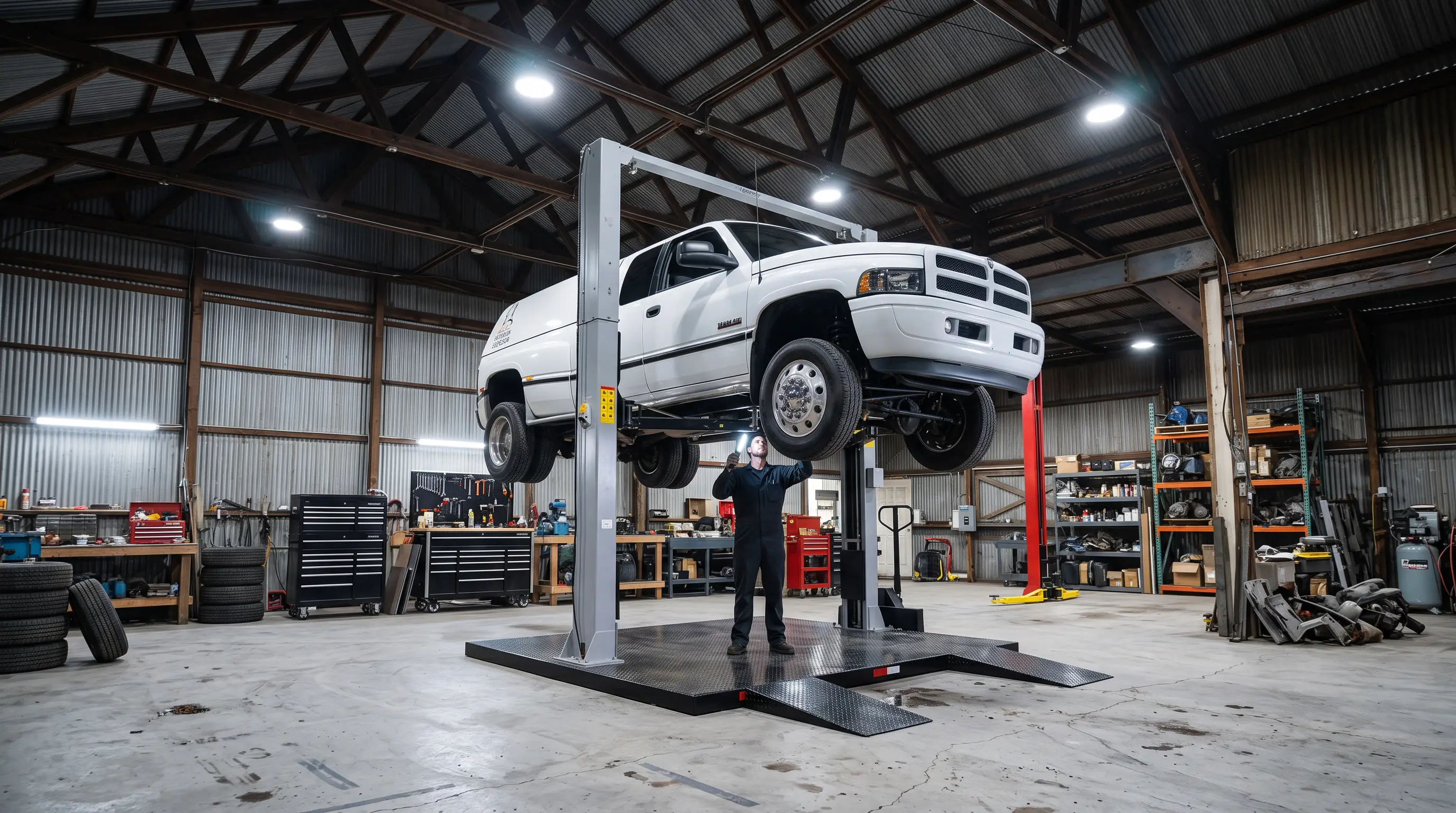
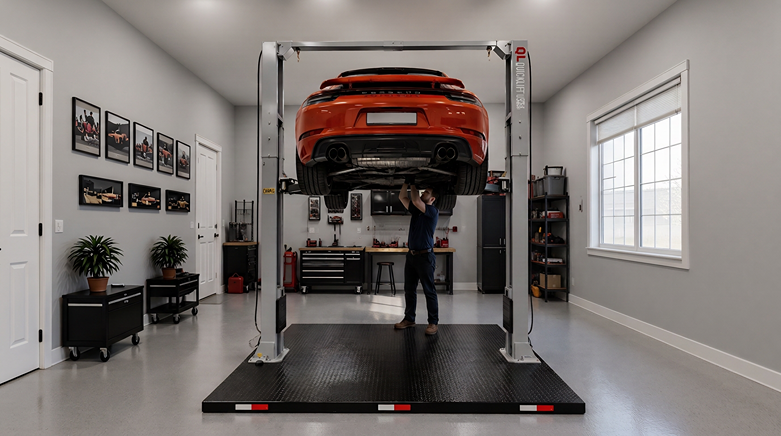
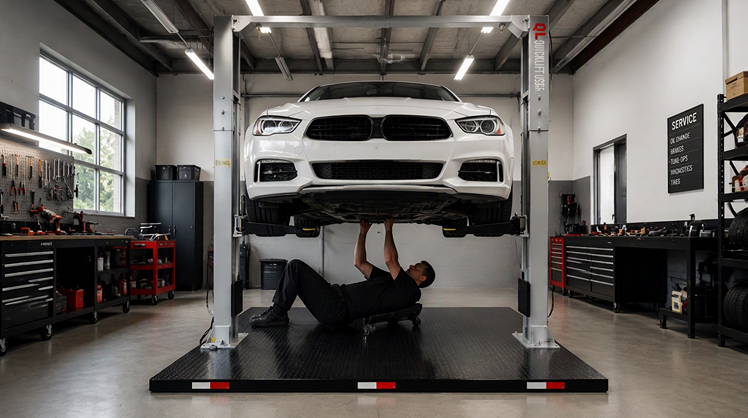
A portable lift doesn't need floor anchors. It doesn't need a concrete pour or a permit. You can set it up in a parking lot, a storage unit, a customer's driveway, or your existing shop bay without touching the floor. That changes everything about how you price and schedule jobs, allowing for greater flexibility and efficiency in managing your workload and maximizing profits.
For Carlos, the biggest win was the last point. A new two-post lift installed in a California shop typically runs between $4,000 and $8,000 when you factor in the lift itself, the electrical work, and the installation labor. A portable car hoist gave him equivalent utility at a fraction of that cost.
Carlos didn't come into this with a spreadsheet. He purchased it because he was frustrated. He kept having to reschedule brake jobs and exhaust replacements because his main lift was always busy. A friend in the industry had mentioned portable lifts; he looked into Portable Car Hoist, and he ordered one.
What he didn't expect was how quickly it would pay for itself.
The first month alone, Carlos used the portable hoist to handle three jobs that he would have previously turned away. Two were brake replacements, and one was an exhaust repair on a truck that had been sitting in his lot, waiting for lift availability. Combined, those three jobs brought in just over $1,200.
The hoist paid for a meaningful chunk of itself in thirty days. That wasn't strategic planning. That was just plugging a leak he already had.
By month two, Carlos started offering mobile mechanic services on the side. He loaded the portable hoist into his trailer and started taking appointments at customer locations, specifically targeting fleet vehicle managers at local businesses who didn't want to pull trucks off the road and bring them in for service.
Fleet maintenance managers consistently rank vehicle downtime as their top concern, according to a 2023 survey by the American Trucking Associations. A mobile lift service that comes to them removes that barrier entirely.
Within six months, Carlos had three recurring commercial clients. Those alone were generating between $2,000 and $3,500 per month in predictable revenue, with very low overhead since he wasn't using shop space or staff time during the visits.
This is the part Carlos didn't see coming. Word got out in the local car community that he had a portable setup. He got asked to provide lift services at a car show in Temecula. He charged a flat daily rate, handled light inspections and brake checks on-site, and walked away with over $1,800 from a single weekend.
He did four similar events in the second half of the year. At that point, the portable car hoist ROI calculation started looking like something you'd expect to see in a business school case study.
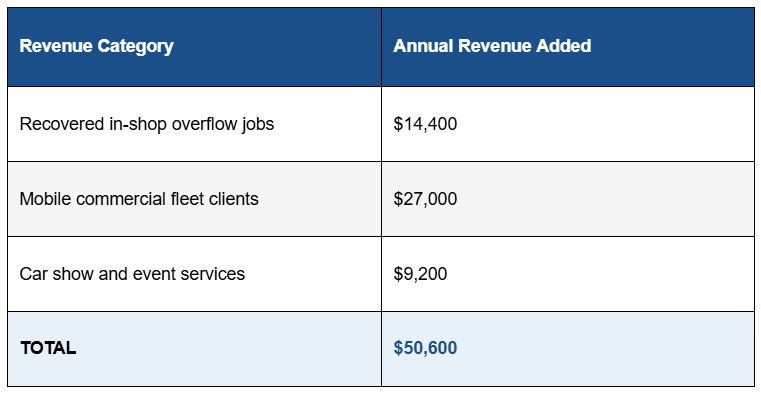
These figures are based on actual job logs and monthly invoicing Carlos tracked across twelve months. Your results will depend on your market, pricing, and how aggressively you pursue mobile and event work.
Carlos's numbers are compelling, but they're his numbers. Here's a simple framework you can use to estimate what a portable hoist could do for your operation.
Be honest here. Think about the last thirty days. How many times did you tell a customer you couldn't get to their vehicle because the lift was busy? Even if it's just two or three jobs per month, that's real money sitting on the table.
Brake jobs, oil changes, exhaust work, alignment prep, and undercarriage inspections typically run between $150 and $600, depending on your market and labor rate. Use a conservative middle number, say $250, for your estimate.
This is where most people undersell themselves. If you add mobile fleet services or event lift support, you're not just recovering lost revenue. You're creating new income that didn't exist before. Even one commercial fleet client at $500 per month adds $6,000 a year.
A Portable Car Hoist unit typically costs significantly less than a permanent two-post installation. When you factor in no installation, no permits, and no downtime during setup, the break-even point is often less than ninety days for active shops.
The portable car hoist ROI math is not complicated. The challenging part is just getting yourself to run the numbers honestly.
Not every shop owner is going to see $50K in year one. But certain types of operations are almost perfectly positioned to see outsized returns quickly.
If you have a demand that currently exceeds your lift capacity, a portable hoist closes that gap at a cost that makes the math work in your favor almost immediately.
Carlos's story isn't unique. It's repeatable. The specific numbers will look different for your shop, your market, and how you choose to use the equipment. But the underlying logic holds across independent shops, mobile mechanics, collectors, and fleet operators alike.
You don't need a second permanent lift. You don't need a bigger bay. You need a smarter way to get more vehicles in the air faster, wherever you're working.
If you're serious about improving your portable car hoist ROI this year, the first step is knowing what you're already losing. Start with thirty days of tracking every job you delay or decline due to lift availability. That number will tell you everything you need to know.
Ready to see what the right portable hoist could do for your operation? Contact us to explore the full model lineup, compare specifications, and get in touch with the team directly. They're based in the Inland Empire and know the Southern California market well, but they ship and support shops nationwide.