


Jader Gil
Marketing Expert
December 20, 2025
9 min read
Here's what nobody tells you when you're shopping for a portable car lift: most of them still leave you flat on your back, staring at the underside of a car from two feet away. That's not a lift. That's an expensive jack stand.
You're about to discover why the QuickJack and the Portable Car Hoist solve completely different problems, which one actually gets you working at standing height, and why your concrete floor might have nothing to do with your decision. One of these options might save you $15,000 in shop equipment. The other will still have you buying a creeper.
Let's cut through the marketing language. The QuickJack and Portable Car Hoist are fundamentally different tools designed for different people with different needs.
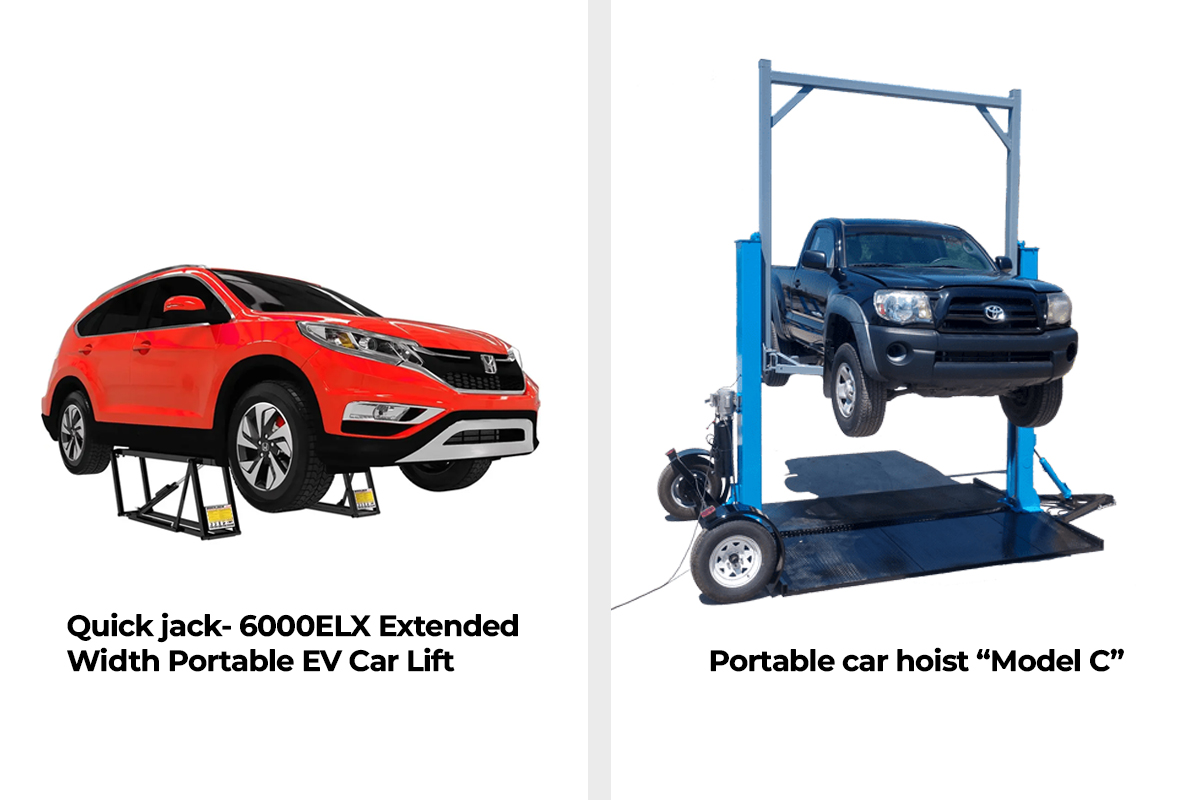
QuickJack is a scissor-style lift system. Two separate frames slide under your vehicle and raise it approximately 24 inches off the ground. It's owned by BendPak, comes with ALI certification on some models, and prices range from $1,400 to $2,200 depending on the model.
The Portable Car Hoist is a true 2-post lift system that requires no concrete bolting. It raises vehicles to full standing height, sets up in minutes, and works on any level surface. We manufacture these right here in Menifee, California, with both electric-powered and battery-powered options.
The difference matters because it determines whether you're working on a creeper or standing upright. Whether you're changing oil in your driveway or running a mobile mechanic business. Whether you need 24 inches of clearance or full walk-under access.
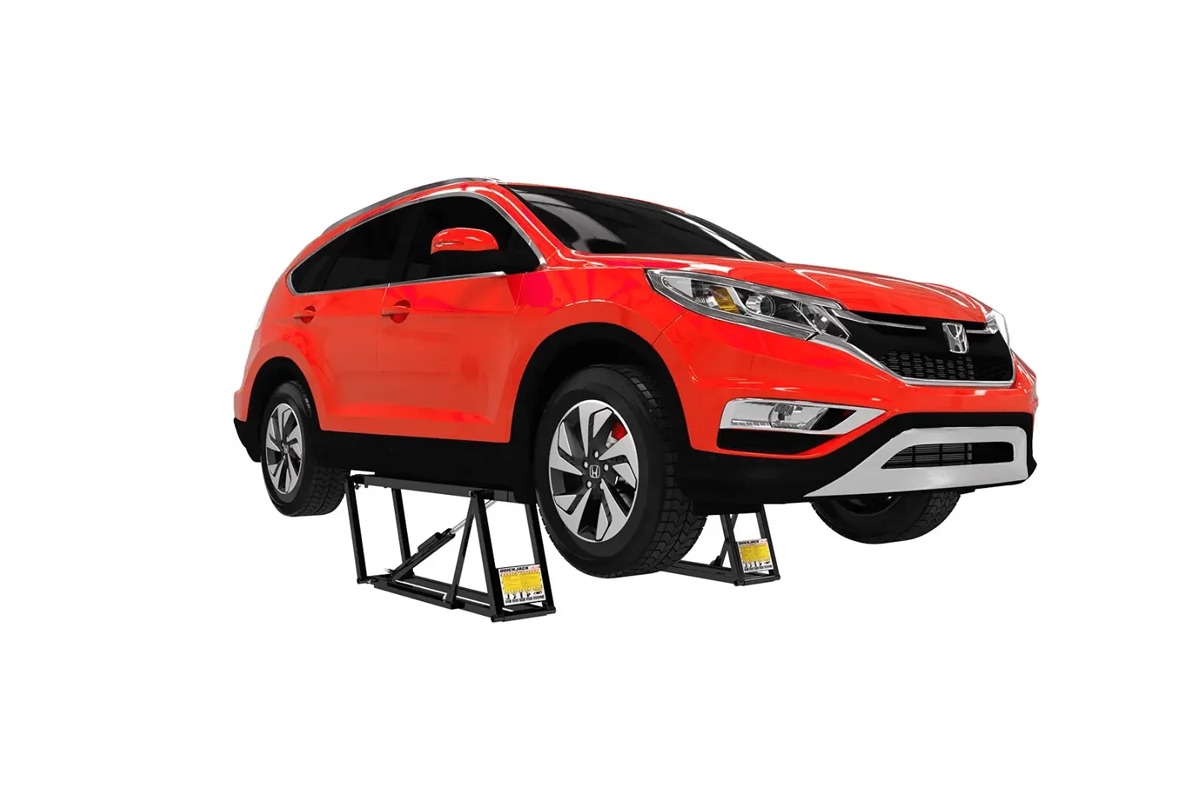
QuickJack earned its reputation for good reasons. If you're a home garage enthusiast doing oil changes, brake jobs, and the occasional exhaust swap, it genuinely beats the floor jack and jack stand routine.
QuickJack strengths:
For the weekend warrior doing maintenance on personal vehicles, QuickJack is a legitimate upgrade from traditional jacking. You'll spend around $1,500 to $1,800 for the 5,000 TL or 7,000 TL models, and they'll last for years with proper care.
Here's where we need to be honest about limitations that the product pages don't emphasize.
The lift height ceiling: Quick Jack's maximum lift height tops out at 24 to 27 inches, depending on the model. For perspective, that means you're still working on a creeper. You're not standing. You're not walking under the vehicle. You're lying on your back with slightly more room than jack stands would give you.
The weight factor: Each QuickJack frame weighs between 50 and 112 pounds, depending on the model. Moving them around your garage, positioning them under your vehicle, and storing them requires effort. Forum users consistently mention this as their biggest complaint after purchase.
Setup hassle: Every use requires connecting hydraulic lines, positioning both frames precisely, and ensuring everything is aligned. Users report this takes 10 to 15 minutes once you get the hang of it. Not deal-breaking for occasional use, but it adds up for frequent work.
Quality control concerns: A quick search through automotive forums reveals common complaints about hydraulic leaks at fittings, uneven lifting between frames, and shipping damage. BendPak's customer service generally handles these issues, but it's worth knowing before purchase.
The bottom line: QuickJack is a better jack stand. It's not a 2-post lift alternative.
A portable 2-post lift like our Portable Car Hoist solves a completely different problem. It gives you the same standing-height access as a permanent shop lift, but without concrete anchoring.
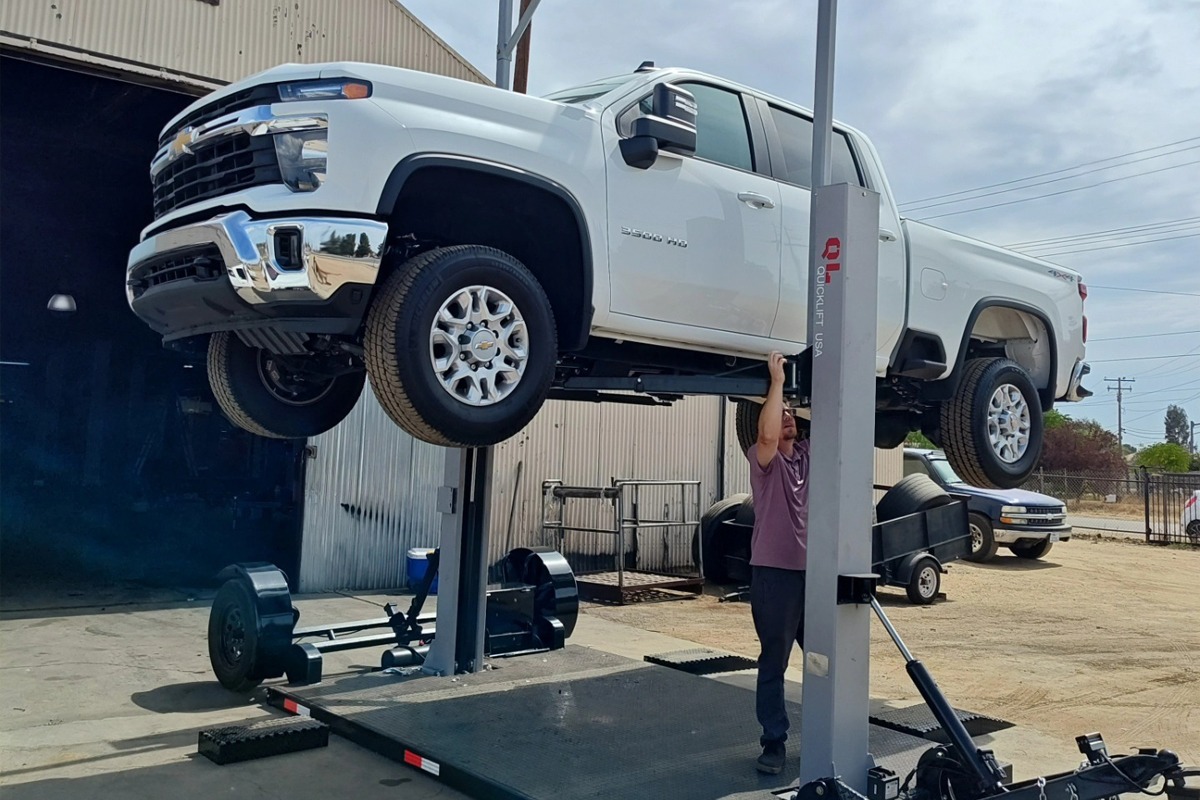
Key differences:
This matters for mechanic shops that rent space, mobile mechanics who service clients on-site, car show organizers who need temporary lift stations, collision shops expanding capacity without construction, and building managers adding vehicle service to their facilities.
Let's look at what you're really spending money on with each option.
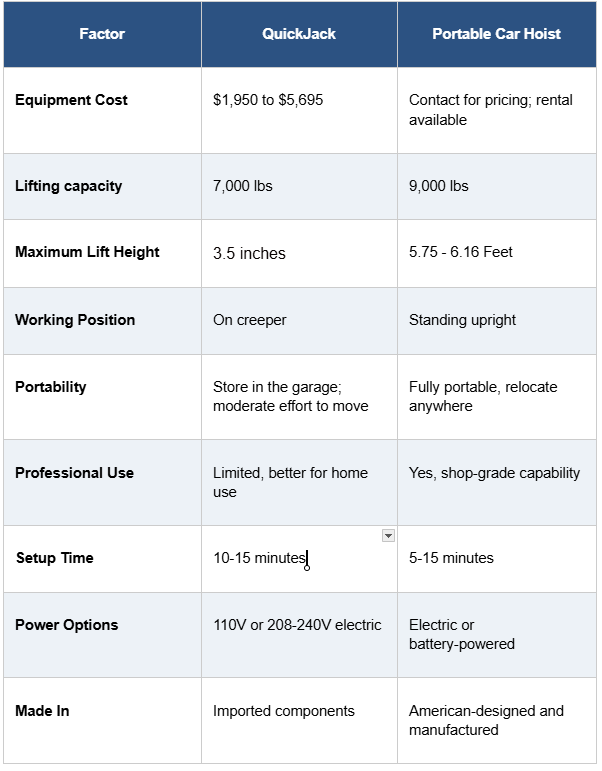
Who Should Buy What: A Direct Recommendation
Let me be direct about who each product serves best.
QuickJack makes sense if:
A portable car hoist makes sense if:
The automotive lift market is projected to grow from $3.92 billion in 2024 to over $5.3 billion by 2035, according to recent market research. What's driving that growth tells you where the industry is heading.
Key trends shaping portable lift demand:
The days of "portable lift" meaning "slightly better than jack stands" are ending. The market wants real professional capability without permanent infrastructure.
1. Can I use a portable 2-post lift without bolting it to concrete?
Yes. Our Portable Car Hoist is specifically designed to work without concrete anchoring. The base plate design distributes weight and provides stability on any flat, level surface. This is what separates true portable lifts from permanent installations.
2. Is QuickJack safe for heavy vehicles?
QuickJack offers models rated up to 8,000 pounds. However, the scissor-style design and 24-27 inch maximum height mean you're still limited in what work you can comfortably do. For trucks and SUVs requiring full access, a true 2-post lift provides more practical capability.
3. What's the setup time difference?
QuickJack requires positioning both frames, connecting hydraulic lines, and alignment for each use, typically 10 to 15 minutes. Our Portable Car Hoist sets up in minutes and doesn't require repeated assembly and disassembly between vehicles.
4. Can I rent before buying?
We offer rental options for our portable car hoist with delivery and setup included. This lets you test the equipment in your actual working environment before purchasing. QuickJack is typically purchase-only through retailers.
5. What about ceiling height requirements?
QuickJack works in any standard garage due to its low lift height. A true 2-post portable lift like ours requires clearance for the posts and lifted vehicle. We can discuss your specific space requirements and recommend the right configuration.
Before you spend money on either option, answer these three questions honestly:
If you're done working on your back and ready for professional-grade access without permanent installation, let's talk. We manufacture portable car hoists right here in Menifee, California, with rental options, delivery, and setup support.
Contact Portable Car Hoist today
Options: Purchase or rent daily, weekly, or monthly with delivery and setup
Ask about our Model A for passenger vehicles and Model C for heavy-duty applications. We'll help you find the right configuration for your specific needs.