



Jader Gil
Marketing Expert
April 1, 2026
9 min read
If your mechanic shop still maintains a bolted-down, concrete-anchored, two-post lift in a permanent corner of your floor, you are likely losing money and flexibility every week.
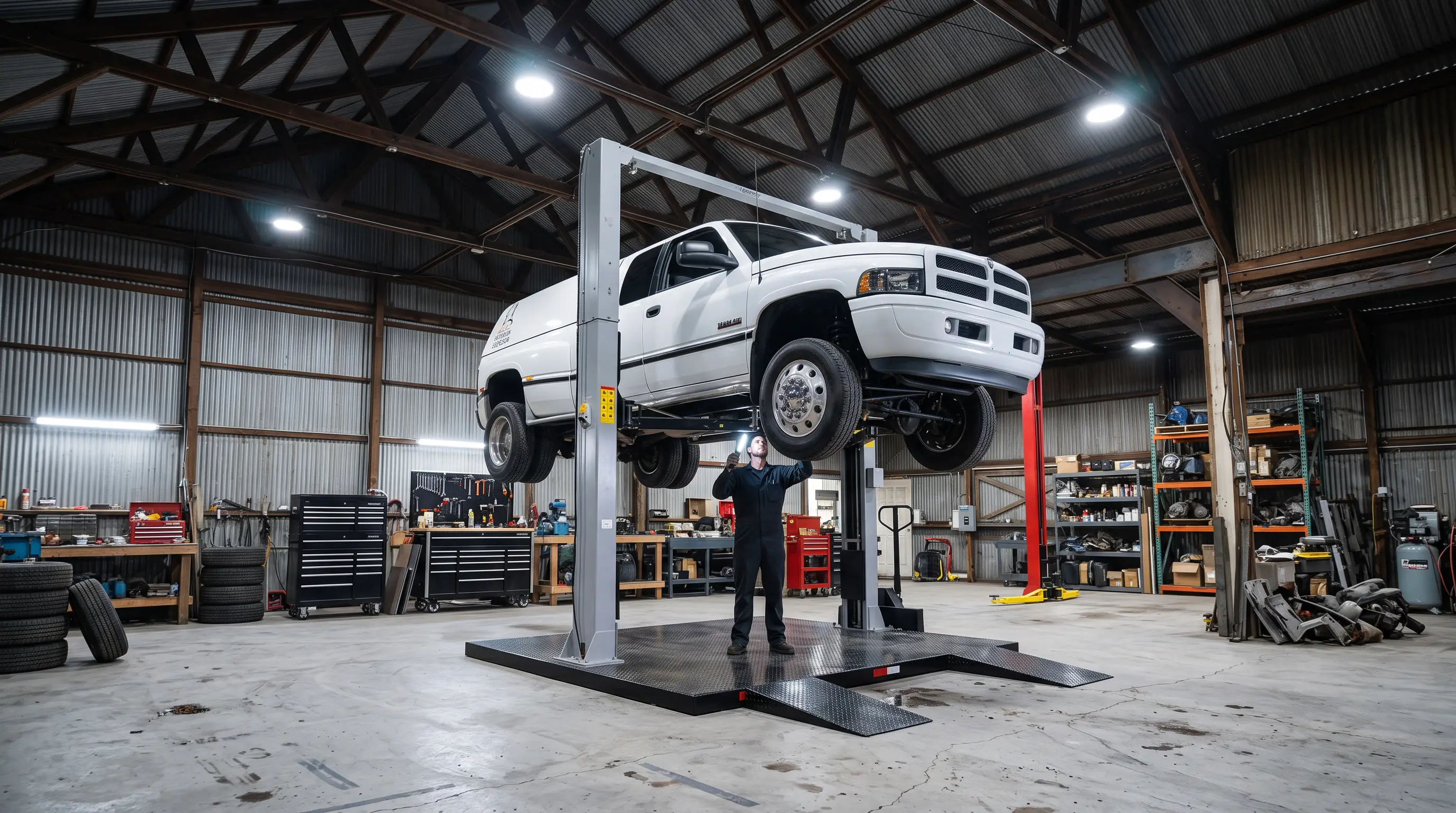
That is not a knock on fixed lifts. They have their place. However, the automotive industry is rapidly evolving, and attentive shop owners are quietly implementing changes. They are replacing, or at least supplementing, their fixed equipment with a portable car hoist for shops, and the reasons are more practical than you might think.
Here is what is actually happening and why it might matter for your business.
Think about the last time you rented or moved your shop space. Consider the last time you had to turn away a large vehicle due to your lift's inability to handle its geometry, height, or weight. Or maybe you were just doing a tire rotation, and your primary lift was tied up for three hours on a transmission job.
Fixed lifts are excellent at one thing: being fixed. They are bolted to the floor, wired into your electrical panel, and certified for that exact spot in the building. The moment something changes, you are dealing with a real problem.
According to a 2023 report from the Automotive Lift Institute (ALI), more than 40% of lift-related incidents in shops happen during installation or relocation, not during regular use. That stat says something. The most dangerous moment with a fixed lift is often when you are trying to move it or modify how it sits, which many shops are forced to do as they grow or reorganize.
And then there is the cost. A commercial two-post lift installation can run anywhere from $4,000 to $12,000 once you factor in the lift itself, the concrete anchor work, the electrical setup, and the mandatory inspection. That is before you turn a single wrench.
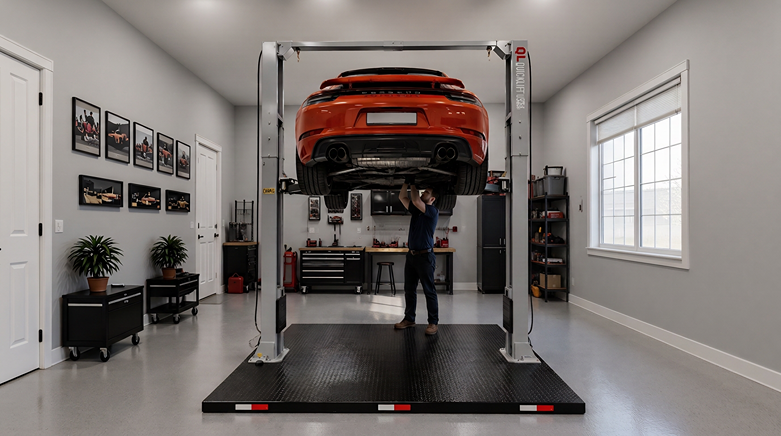
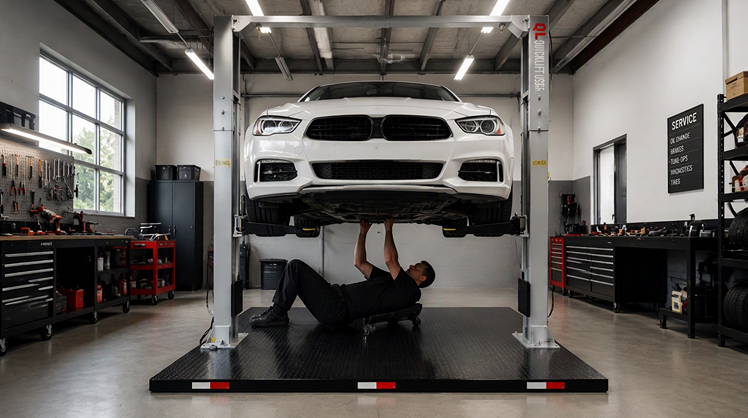
This is where the conversation gets intriguing. A portable car hoist for shops solves most of the problems above without asking you to compromise on safety or capability.
Here is what shop owners are actually saying when they make the switch:
"We moved locations, and I didn't have to leave my lift behind." That is a real concern. Because the cost of deinstallation and reinstallation makes it not worth it, fixed lifts are almost always left behind during a shop move. Portable hoists go with you.
"We set it up in the parking lot for an overflow weekend and handled twice the cars." This is one of the most underrated use cases. When you have a rush, a portable unit lets you create a second lift bay on any flat surface with a power source.
"No landlord headaches." If you are renting your shop space, many leases either prohibit or complicate the installation of equipment that requires concrete anchoring. A portable hoist sidesteps that entirely.
A 2024 survey by the Independent Garage Owners of America found that nearly 1 in 3 independent shops is operating in a leased space with some form of restriction on permanent equipment modifications. That number is not going down.
Let's put this side by side so it is easy to compare:
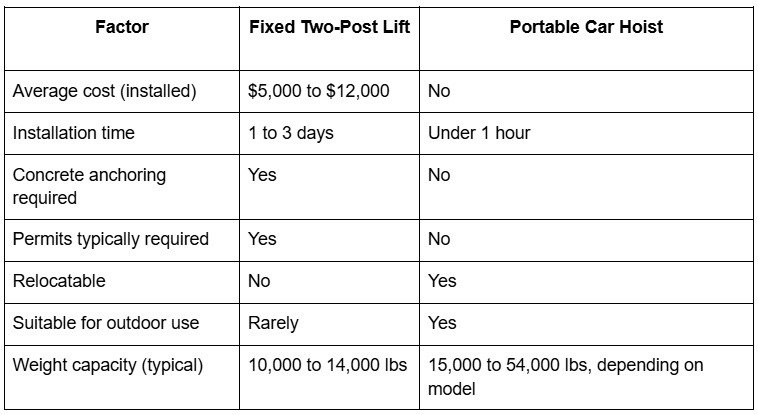
The numbers are not even close when you factor in the total cost of ownership over 5 years, especially if your shop relocates even once.
It is not just small independent shops making this move. Here is a breakdown of who is adopting portable car hoists and why.
A shop owner in California shared this in an automotive forum: he was running a single fixed lift for years and consistently had to turn away oil change and brake jobs because his lift was tied up on bigger work. He added a portable hoist on the other side of the shop, with no concrete work, no permit, and a weekend setup. That second bay paid for the hoist in under two months based on the jobs it added.
Such a scenario is not unusual. When your primary lift is your only lift, you are constantly choosing between job types. A portable second unit gives you flexibility without a full renovation.
Mobile mechanics are probably the clearest example of someone who needs a portable car hoist for shops or, more accurately, a portable car hoist for wherever they happen to be working.
The mobile mechanic market has exploded. According to IBISWorld, the mobile mechanic industry in the US grew by over 7% annually between 2019 and 2024, driven by consumer demand for convenience and lower overhead for mechanics themselves. But if you can't safely lift a car at a client's site, you're limited.
A portable hoist changes that completely. You show up, set it up on a flat surface, lift the vehicle, do the work, and pack it back in the truck. It eliminates the need for floor jacks, sketchy stands, and liability risk.
Serious car people often have multiple vehicles and limited space. They do not run a commercial shop, but they are also unhappy crawling under a classic Mustang on a creeper with two floor jacks wobbling. A portable car hoist gives them a professional-grade lift without a dedicated hydraulic bay.
Many collectors also rotate vehicles in and out of storage, which means they need a lift that works wherever the car is, not just in one fixed spot in their garage.
At racing events and car shows, the ability to lift a vehicle quickly, safely, and without any infrastructure is genuinely valuable. You are not going to anchor a two-post lift into a temporary paddock. A portable unit is the only real option for serious pit-side maintenance.
Not all portable hoists are equal. Here is what actually matters when you are evaluating one for professional shop use.
Consumer-grade portable lifts often max out at 6,000 lbs. If you are working on trucks, SUVs, or commercial vehicles, that is not enough. Look for units rated at 10,000 lbs or higher if you want to cover the full range of vehicles a modern shop sees.
Some portable hoists run on standard 110V power; others require 220V. Know what your shop can supply before you buy. If you are doing mobile work, check whether the unit can run from a generator.
If it takes two hours to set up and break down, it is not really portable in any useful sense. Good portable hoists designed for professional use should be fully operational in under 30 minutes.
This is not the place to cut costs. Look for units built with high-tensile steel and certified safety locking mechanisms at every stage of the lift. The ALI (Automotive Lift Institute) and ANSI (American National Standards Institute) standards exist for a reason, and a quality portable hoist will meet them.
Does it break down into manageable pieces? Does it fit in a standard pickup truck bed or cargo van? Does it have integrated wheels for moving it around the shop floor? These details matter when you are using it regularly across different locations.
There are a few common objections shop owners raise about portable hoists. Here is the honest response to each.
"They are not as safe as a fixed lift." This is not accurate for quality portable units. The key variable is whether the hoist meets ANSI and ALI safety standards. A certified portable hoist is engineered to be as safe as a fixed unit for its rated capacity. What creates risk is using any lift, fixed or portable, outside its specifications.
"We do not have time to set up and break down a lift every day." You probably do not need to. Most shops that add a portable hoist leave it in a semi-permanent position on the shop floor and only move it when needed. Portability is an option, not a requirement.
"Our clients expect a fully built-out shop." Fair point for client-facing spaces. But most clients care about whether the work gets done right and on time. A professional portable setup is not a downgrade in perception, especially when it means faster turnaround.
The automotive service industry is thriving, with successful shops incorporating flexibility into their operations from the outset. A portable car hoist for shops is not a compromise. It is a smart operational decision that cuts installation costs, removes permit headaches, and gives you the ability to work anywhere your customers and vehicles are.
Whether you are a growing independent shop, a mobile mechanic building a client base, a collector who wants to work on cars properly, or a commercial fleet manager who needs lift capability at multiple sites, the case for going portable is real, and it is backed by numbers, not just marketing language.
The smart shop owners have already figured this out. The rest are still waiting on a concrete crew.
Are you prepared to determine which portable hoist model best suits your shop's requirements? Visit portablecarhoist.com and schedule a free 15-minute consultation. You will receive straightforward guidance on which unit is most suitable for your needs.