



Jader Gil
Marketing Expert
January 13, 2026
9 min read
Automotive experts, DIY mechanics, and car aficionados must have the right equipment for lifting to fix things swiftly and safely. In the last few years, the hydraulic portable automotive lift has grown increasingly popular. These devices are compact yet powerful. They work like traditional elevators, but they don't take up as much space, demand as much installation, or cost as much. They work well in tiny repair shops, home garages, or mobile detailing businesses.
We go into great detail about how hydraulic technology works in small lifts, why many mechanics prefer a smaller, portable hydraulic vehicle lift over a larger one, and how to keep them safe and working for years. This article provides all the information you need, whether you've been thinking about acquiring one for your workshop or if you already have one and want it to last longer.
Most professional lifting equipment still relies on hydraulics because they can transfer little amounts of energy into very strong lifting power. This is how it works:
According to Pascal's Law, pressure applied at one point in a closed fluid is evenly distributed throughout the fluid. This is how hydraulic systems function. The pressure inside the system goes up when you turn on a hydraulic pump. This is because the fluid is pushed by the pump. This makes it easier for the lift to lift large things.
A portable hydraulic car lift usually has:
When the pump pushes hydraulic fluid into the cylinder, the piston goes up. This raises the automobile. Hydraulic lifts are safe and reliable since they move smoothly and in a controlled fashion.
Today's portable elevators have:
Even if the mechanic has to use force to fix it, these characteristics keep the automobile steady while they work on it.
There are many kinds of portable hydraulic lifts for sale, and each one is best for a given job or type of work area:
The support structure for scissor lifts spans over itself and gets taller as the lift goes up. These are highly stable and make it easier to get to the bottom of the car. They are very low when they are collapsed; thus, they are great for garages with low ceilings.
Four-post lifts are one of the most popular portable options since they are very solid and simple to use. There is no need for accurate alignment because cars can just drive onto the platforms. People used to think these things were fixed in place, but now there are more portable versions with locking casters that let you move them when you need to.
Two-post lifts are better for getting to the bottom of a car, which makes them excellent for suspension work and wheel services. Portable models are lighter than fixed ones, but you still need to think about how much weight the floor can bear and how high the ceiling is.
Mobile column lifts are made up of wireless columns that may be moved around an automobile. These allow you the maximum freedom and are perfect for heavy-duty autos and business use.
Choosing the right lifting system for a shop or garage can have a huge effect on safety and how much work gets done. Many professionals prefer portable hydraulic models for these reasons:
These portable devices don't need to be set up and don't take up as much floor space as 2-post or 4-post lifts do.
Don't be fooled by the size. A portable hydraulic vehicle lift can lift anything from cars to SUVs, depending on the model. Most of them can lift between 2,000 and 8,000 pounds, which is more than enough for most routine maintenance tasks.
You can use a portable hydraulic lift to accomplish things like changing the oil.
It is one of the most helpful things you can have at work.
Because hydraulic systems work quickly and smoothly, mechanics don't have to wait as long for the car to go up or down. Some types can lift a car all the way up in under a minute.
These systems are built with:
Things to Think About When you choose a portable hydraulic car lift, there are a few crucial things to keep in mind. The weight capacity is the most crucial item to think about. Check that the lift can safely hold your biggest car with a little extra room. Passenger cars normally weigh between 3,000 and 5,000 pounds, but SUVs and trucks can weigh more than 6,000 pounds.
You can assess how much space you have to work beneath the automobile by how high the lift is. Think about the repairs and maintenance you'll do the most often. You don't need as much height to change the oil as you do to operate on the transmission or fix the exhaust system. Most portable elevators can go up to 48 inches high.
There is no room for discussion on safety features. Find automatic safety locks that work at different heights to make sure the elevator doesn't fall down when you don't want it to. Always keep in mind crucial safety features, including systems that stop overloads, surfaces that don't slip, and ways to lessen the weight in an emergency.
The compactness and portability of the item are quite crucial in smaller workshops. Measure the area you have carefully. You need to think about not only the lift itself but also the space that automobiles need to park on it. Good casters with locks keep the lift from moving while it's being used.
Taking care of your portable hydraulic vehicle lift will make it last longer, function better, and, most importantly, be safer. If you don't take care of your tools, they could break down, which could cause terrible accidents or injuries.
Taking care of hydraulic fluid is the most crucial element of lift maintenance. Every month, check the levels of the fluids and look for any signs that they have been contaminated or changed color. It is unclean and has to be changed straight away if the fluid is black and cloudy. Most manufacturers recommend that you change all of the fluid every year or after a specified number of hours of use. Use the type of hydraulic fluid that the manufacturer says to use every time. Using a different kind can harm seals and make the system work less well.
Before each use, make sure the safety features are working. Test the automated locks to make sure they work at different heights. Look for evidence of wear, fraying, or damage on cables, chains, and lifting arms. Before the lift may be used again, any broken portion of the safety system must be replaced straightaway.
You need to clean it often by removing dirt, grease, and other debris from all parts, but especially from moving parts and hydraulic cylinders. Things might wear out faster and even break down the system if they get contaminated. Choose the correct cleaning supplies so that they don't damage seals or hydraulic parts.
You need to regularly oil all of the moving parts, like joints, pivot points, and sliding surfaces. Follow the manufacturer's directions for how often to use the lubricant and what kind to use. If you use too much lube, it could attract dirt, and if you don't use enough, items could wear out too rapidly.
You should check the structure once a month. Look for cracks in the welds, bent components, or any other signs that the structure is under stress. Pay particular attention to areas where the heaviest weight is. Even small cracks can develop quickly when things are stressful, which could lead to a big collapse.
Even the best portable hydraulic lifts might have troubles now and again. Here's how to solve the most common ones:
Some such reasons are:
To solve the problem, fill the fluid, bleed the system, and inspect the hoses for leaks.
Here are some of those reasons:
Answer: Use the lift on a flat surface, relocate the automobile, or change the worn pads.
Reasons that could be:
Change out the pieces that filter and add clean hydraulic fluid to fix the problem.
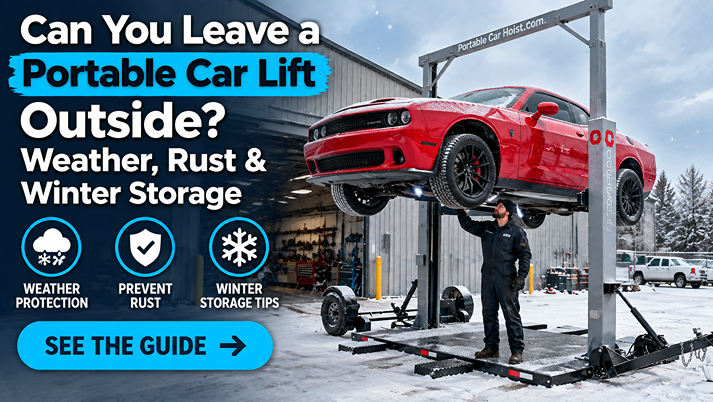
A good portable hydraulic vehicle lift costs a lot of money, but it will survive for decades if you take care of it. In addition to routine maintenance, taking care of the environment is also important for the long life of equipment. When possible, keep the lift out of the rain. Water speeds up rust and tears down hydraulic seals.
Very hot or cold weather can influence how thick the hydraulic fluid is and how strong the seals are. You might wish to use hydraulic fluid that works in a wider range of temperatures if your lift works in an area that isn't heated. You should cycle the lift now and then if you don't use it for a long period. This will keep the seals oiled and save them from drying out.
Keep careful records of all maintenance work, including the dates, the services done, and any problems that came up. This paperwork is highly useful for keeping track of patterns, establishing plans for preventative maintenance, and supporting warranty claims if they are needed.
1. How safe is a hydraulic car lift that you can move?
It's really safe if you use it in the appropriate way. These lifts have built-in safety locks, overload protections, and pressure release valves. It is safe to use the lift as long as you don't go above the weight limit and it is on a flat surface.
2. Is it possible for a portable hydraulic lift to raise trucks and SUVs?
Yes, several models can lift SUVs, crossovers, and light trucks. Always check that the load rating is correct for the weight of your car.
3. How often should I clean and maintain my portable hydraulic lift?
You should make a quick check before each use, a more complete check once a month, and a fluid service every three to six months, depending on how often you use it.
4. Is it okay to use the lift outside?
Yes, but only if the surface is flat, sturdy, and strong. Don't use the lift if it's rainy or the ground is unsteady, because you might slip or rust.
If you want your workshop to be powerful, efficient, and mobile, you need a hydraulic portable vehicle lift. This is true for both professionals and hobbyists. If you take care of a high-quality lift by inspecting and maintaining it regularly, it can last for many years and perform safely and dependably. A good lift can make a great difference in how well you accomplish your job, whether you're conducting small repairs or big ones.
Now is the greatest time to get a high-quality portable car hoist if you want to increase the output of your shop. Look at the choices that work for you and learn how much superior lifting technology can help.